

Lifeline on timber: fall protection systems for timber structures
H-RAIL and rope access for timber structures: the Danish example
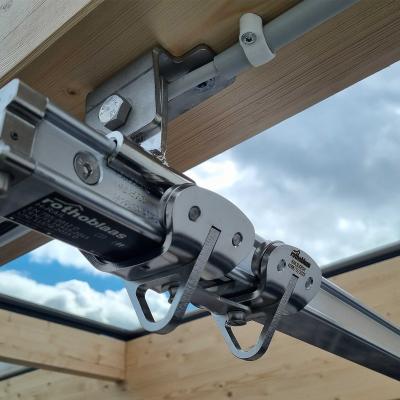
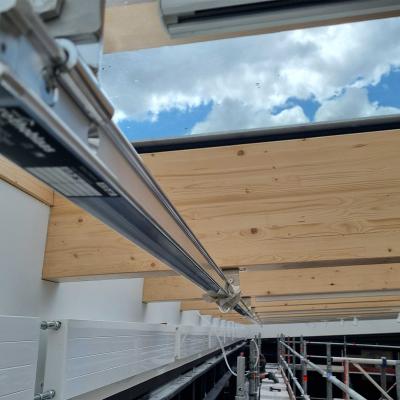
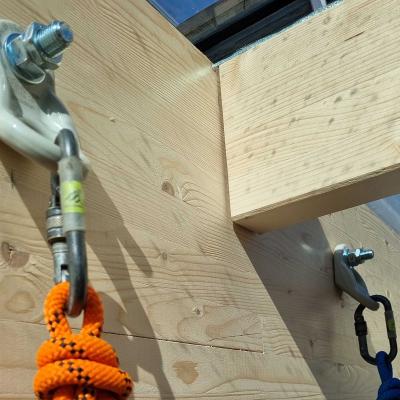
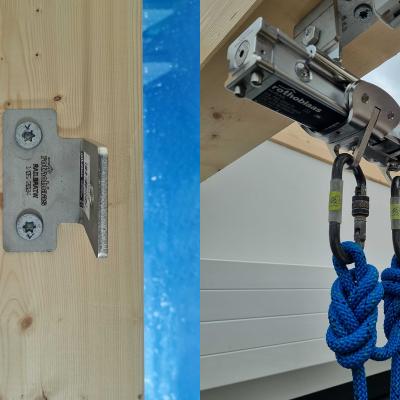
Installing a lifeline on timber structures or substrates means designing a fall protection system that takes the material's unique characteristics into account. Unlike concrete or steel, installing a lifeline on timber requires a more targeted approach. The design must account for the material's mechanical properties and the long-term performance of the anchor system.
Rothoblaas provides certified anchor systems for timber structures, used on construction sites across Europe. In Denmark, Rebteknikeren ApS installed the H-RAIL system together with the WING anchor point on this long-span timber structure, enabling rope access to be used as the primary solution for future maintenance work.
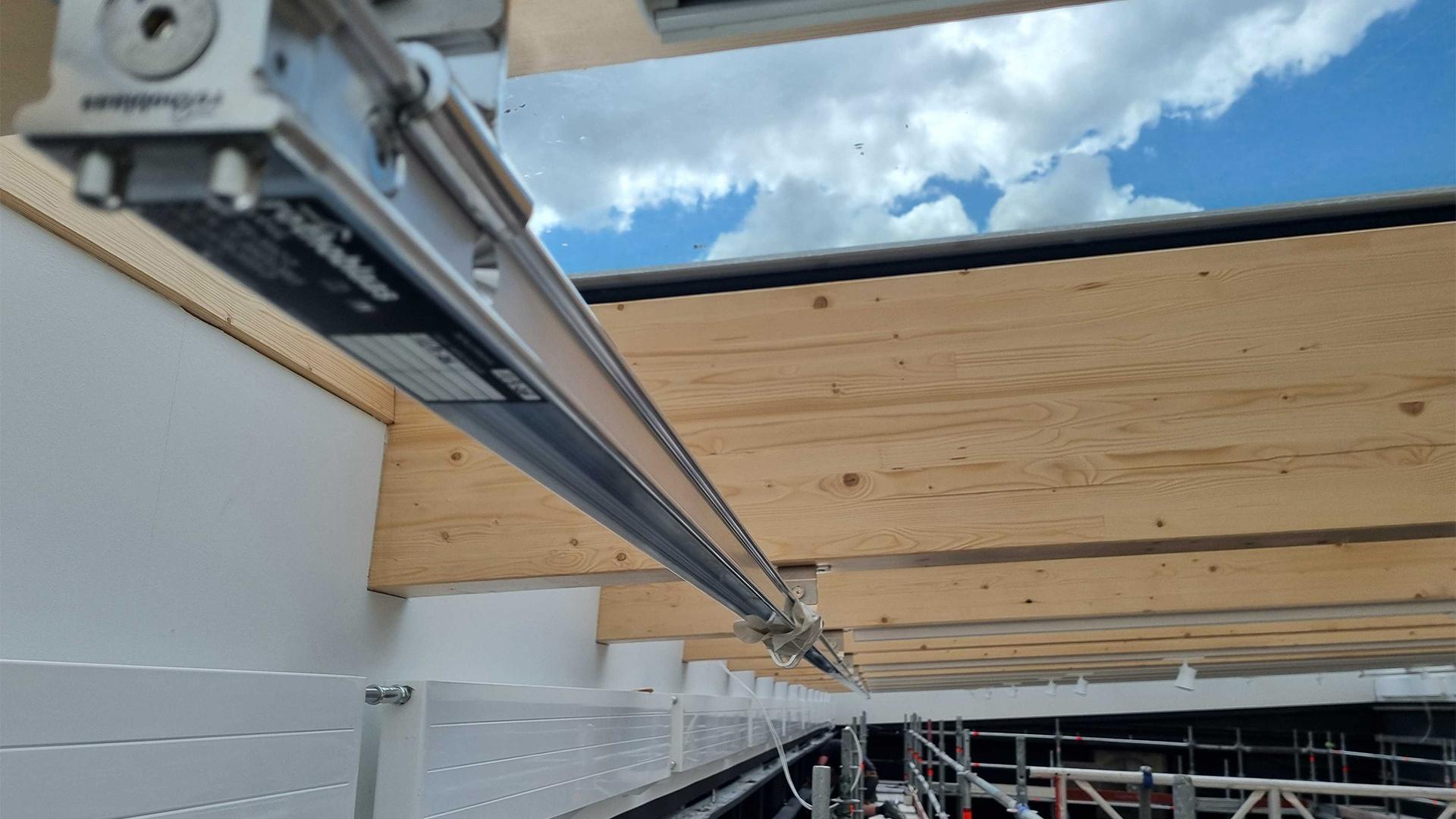
The technical challenges of a lifeline on timber
Timber is an anisotropic material that responds to changes in moisture and temperature. Continuous humidity and thermal cycles cause it to expand and contract over time, gradually reducing the holding capacity of screws and potentially affecting the long-term stability of the anchorage. Unlike concrete, deterioration in a timber connection can be difficult to detect through visual inspection alone.
In the event of a fall, the impact force transmitted to the supporting structure can easily exceed 10 kN. On a timber beam, a rigid anchor point generates concentrated torsional and shear loads that can split the timber grain or lead to localised failure. Another critical factor is membrane integrity. Penetrating the waterproofing layers to reach the neutral axis of the timber elements can create thermal bridges and points of water ingress, which may eventually lead to internal timber decay.
For these reasons, designing a lifeline on timber means considering not only the product itself, but the entire system, from the fastenings and load distribution through to preserving the integrity of the roof build-up.
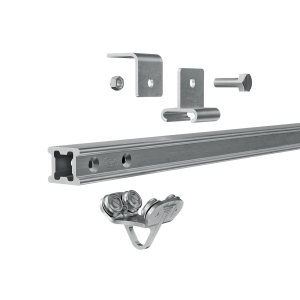
H-RAIL: the rail lifeline system for timber
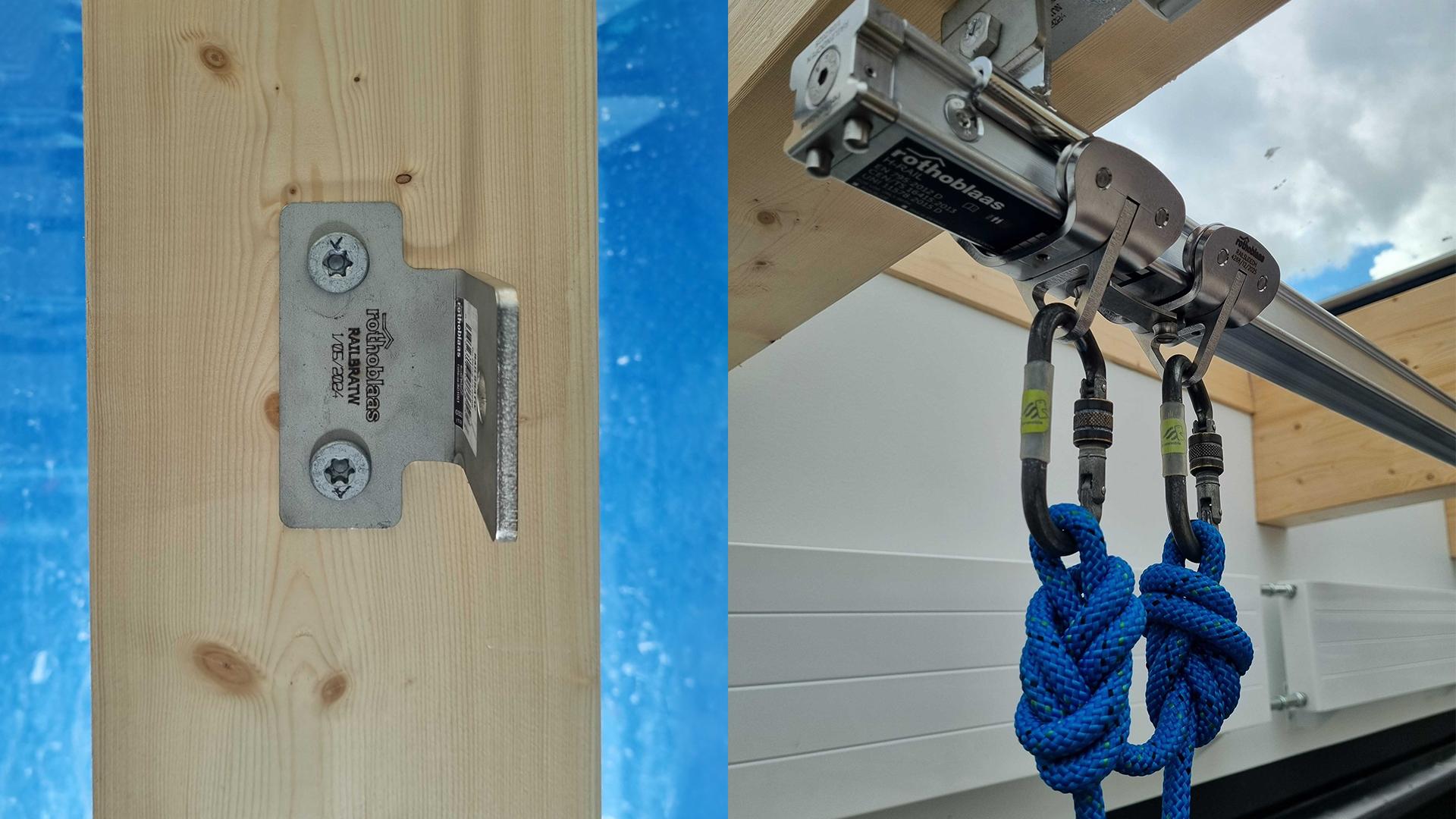
The H-RAIL lifeline is a rigid, modular fall protection system that creates horizontal anchorage lines with a limited number of fastenings. By distributing the load across multiple supports, H-RAIL is particularly well suited to timber structures, where concentrated forces at a single connection increase the risk of damaging the timber grain.
The system is modular and can be adapted to different geometries. The rail can be configured with straight or curved layouts, custom curvature and angles from 90° to 180°. H-RAIL is available in custom RAL colours and a choice of anodised finishes, allowing it to integrate seamlessly into the architecture with minimal visual impact.
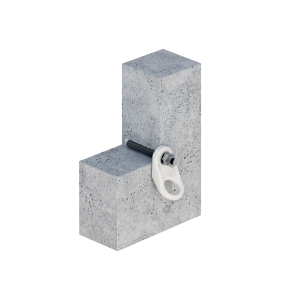
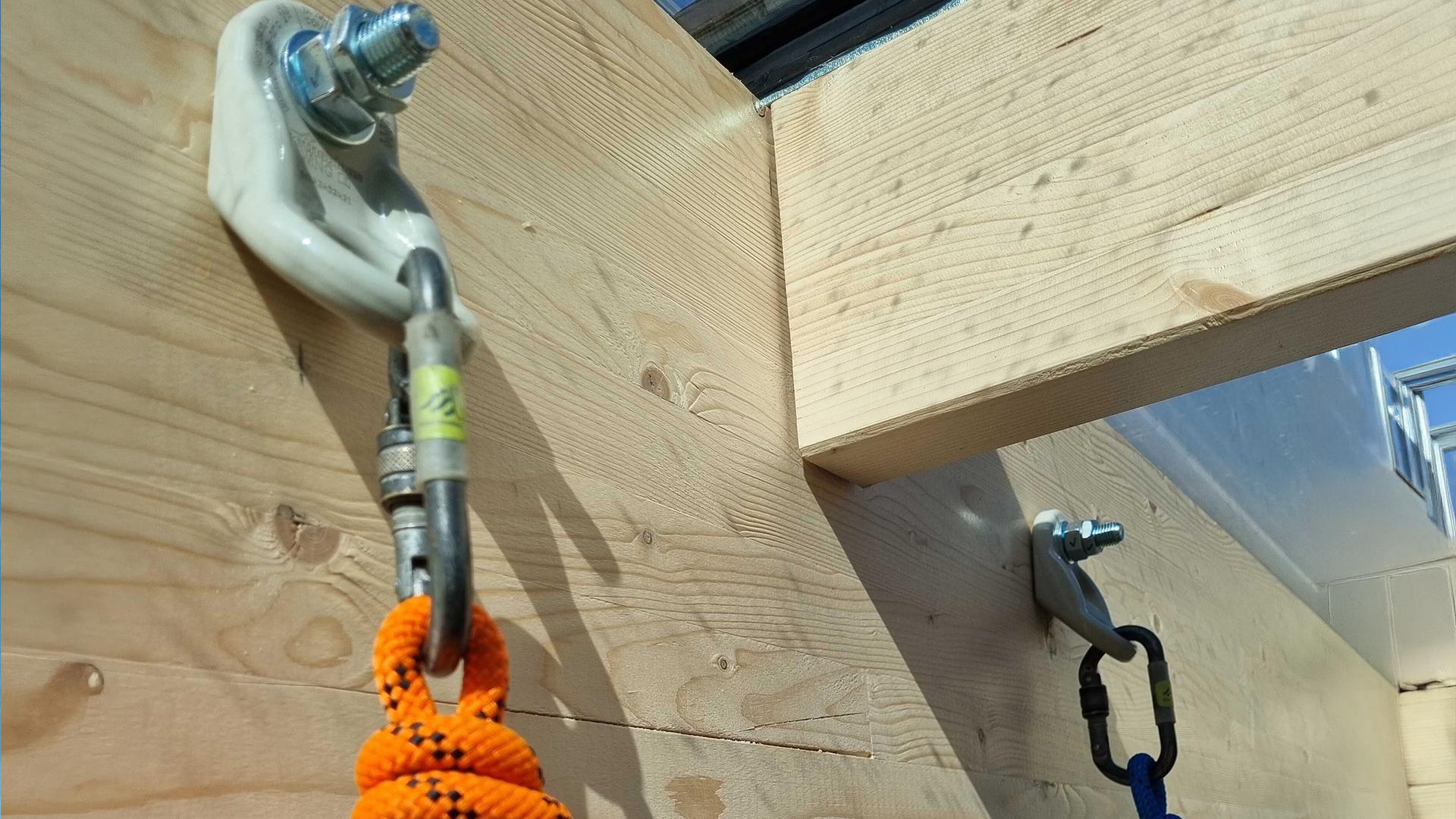
The WING single anchor point can be used with the system for rope access and suspended work applications, accommodating up to three users simultaneously. Robust and certified, WING is suitable for both fall protection and continuous work at height.
Rope access on timber structures
Rope access is often the most efficient solution for work on roofs, especially those with long-span timber structures, where the use of scaffolding or mobile elevating work platforms can be both time-consuming and costly. A permanent rail system such as H-RAIL provides repeatable access without the need for additional installations, reducing maintenance costs over the long term.
On the Danish project by Rebteknikeren ApS, rope access was selected from the earliest design stages as the primary solution, both for economic and operational reasons. This decision directly determined the sizing and layout of the anchor system for suspended work.
Technical support during system design
A lifeline on timber should be designed before the structure is closed. Defining the position of the fastenings, the load-bearing capacity of the beams at the anchor points, and the rail layout during the design stage allows the system to be fully integrated without the need for subsequent modifications.
For the Danish project, the Rothoblaas technical consultancy team was involved from the outset, working alongside the installer on the concept drawings. Technical support included verifying the layout, sizing the system and preparing the documentation for the handover.
To find out more about rail lifeline systems and rope access solutions for timber structures:www.rothoblaas.com/products/fall-protection-system
All rights reserved