



Interaction between strength and stiffness in connections with a resilient interlayer
How to integrate soundproofing and structural performance
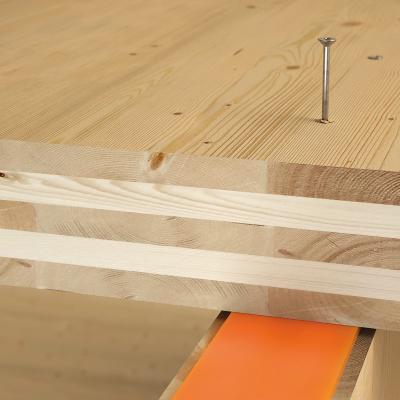
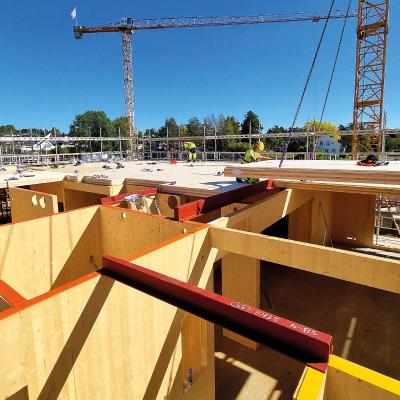
Soundproofing in timber structures is becoming an increasingly stringent design requirement. As performance standards for multi-storey CLT buildings continue to rise, designers need solutions capable of limiting structure-borne noise transmission, particularly at panel joints.
Here, the critical challenge becomes clear: inserting a resilient layer between two structural elements improves acoustic behaviour, but it also introduces a mechanical discontinuity in the load transfer.
This naturally leads to a key engineering question: To what extent does the insertion of an acoustic profile affect the structural performance of a connection?
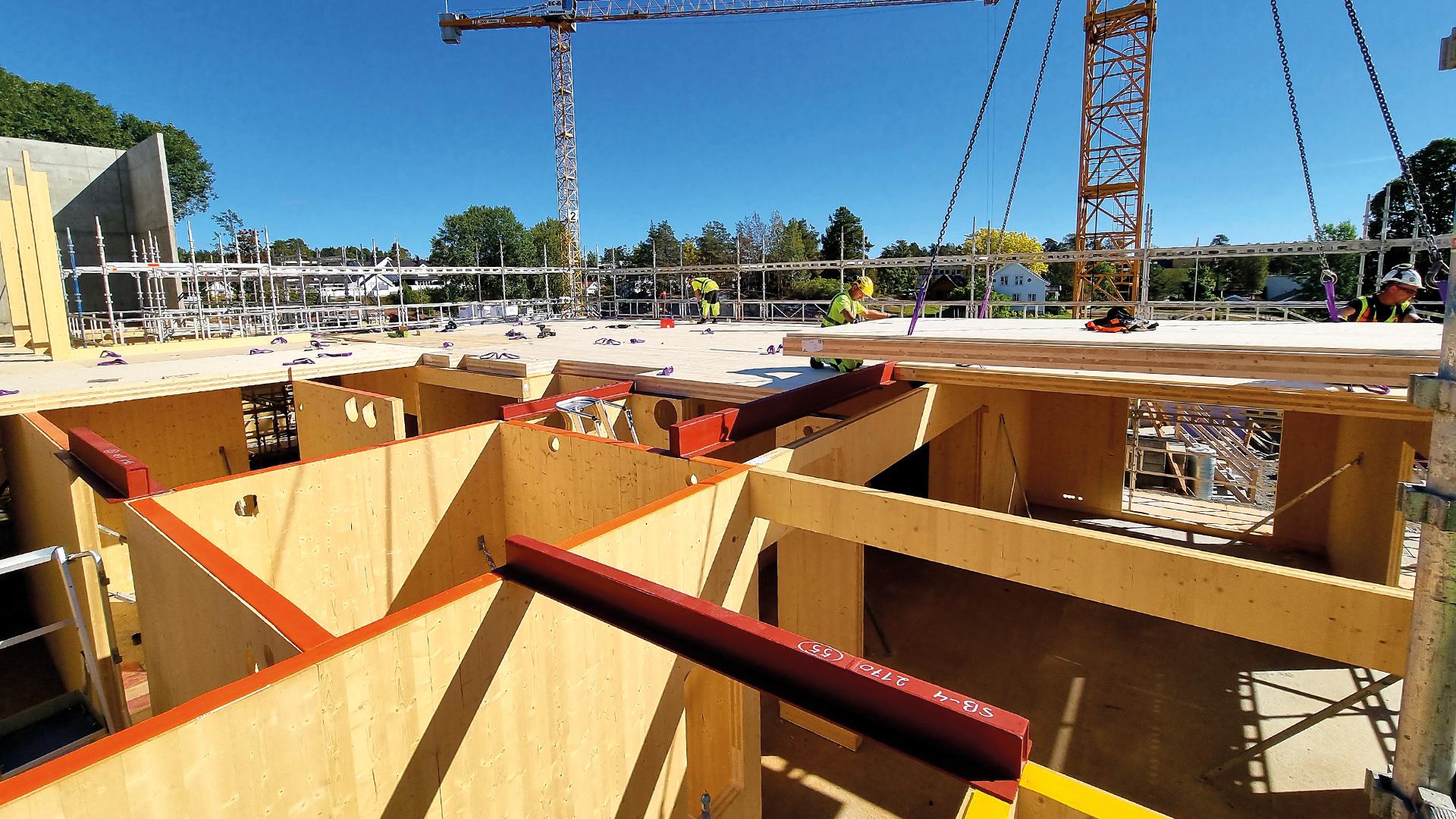
The challenge: acoustic decoupling vs structural continuity
In timber-to-timber or CLT-to-CLT shear joints, load transfer depends on several key factors:
the load-bearing capacity of the connector;
the stiffness of the connection;
the frictional contribution between the contact surfaces.
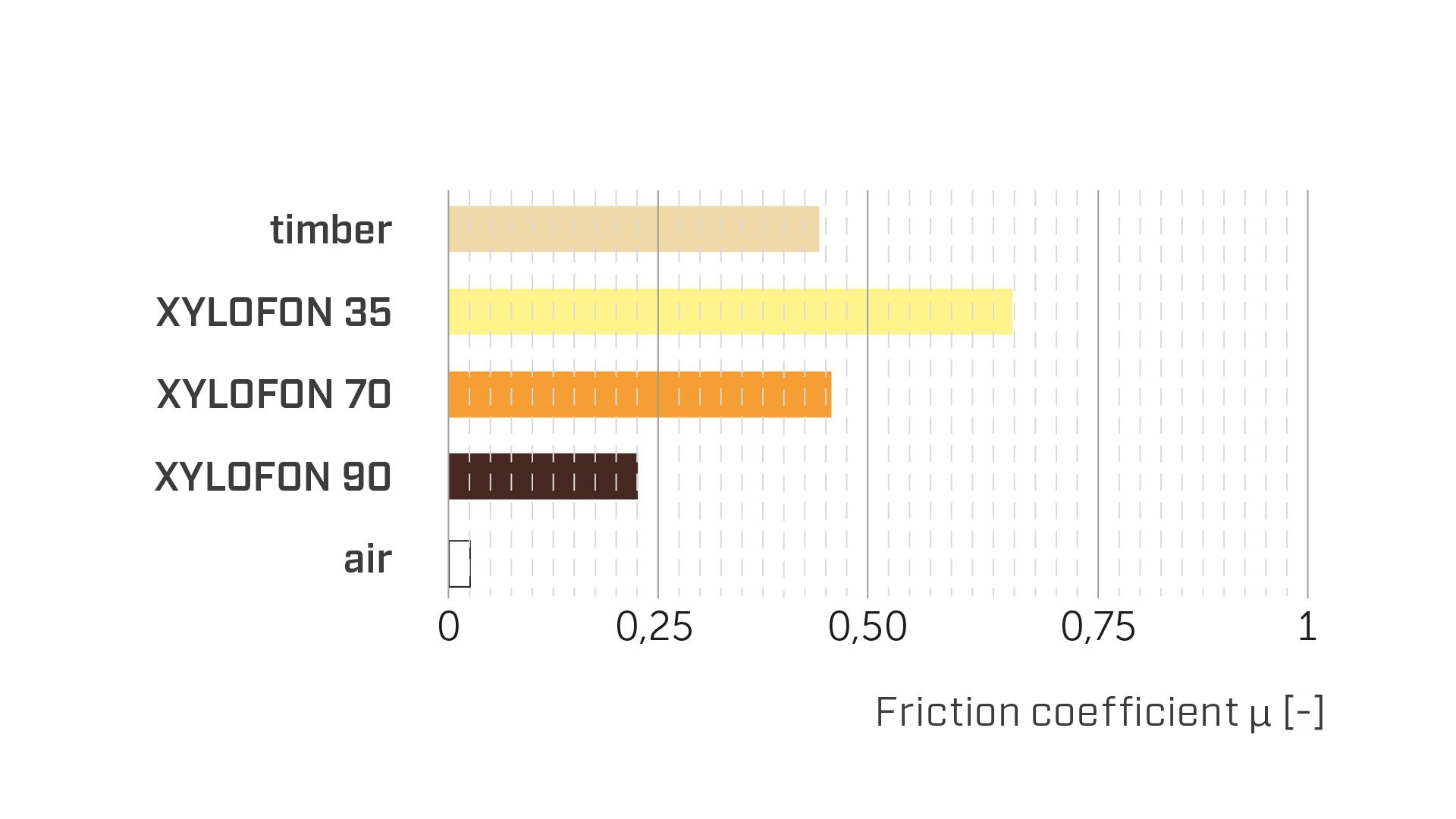
Introducing a resilient profile – such as XYLOFON or PIANO – eliminates the direct contact between timber surfaces. This creates a controlled gap that improves vibrational and acoustic behaviour, but it may also influence:
the shear strength of the joint;
the stiffness of the connection (Kser);
the cyclic response of the system.
In a multi-storey building, the stiffness of joints directly affects global deformations, load redistribution and dynamic behaviour. It is therefore far from a secondary parameter.
The solution: experimental validation and predictive modelling for joints with resilient profiles
To provide clear answers to these critical issues – in line with the Rothoblaas approach – an extensive testing campaign was carried out on connections using partially threaded screws (HBS, HBS EVO) and fully threaded connectors (VGZ, VGZ EVO), with resilient profiles of different types and thicknesses inserted in between.
The tests considered:
monotonic loading;
cyclic loading;
different geometries (CLT/CLT, timber/timber);
profile thicknesses of 6 mm and above.
The results now make it possible to objectively interpret the structural-acoustic interaction.
Strength: the behaviour of timber joints with resilient profiles remains essentially unchanged
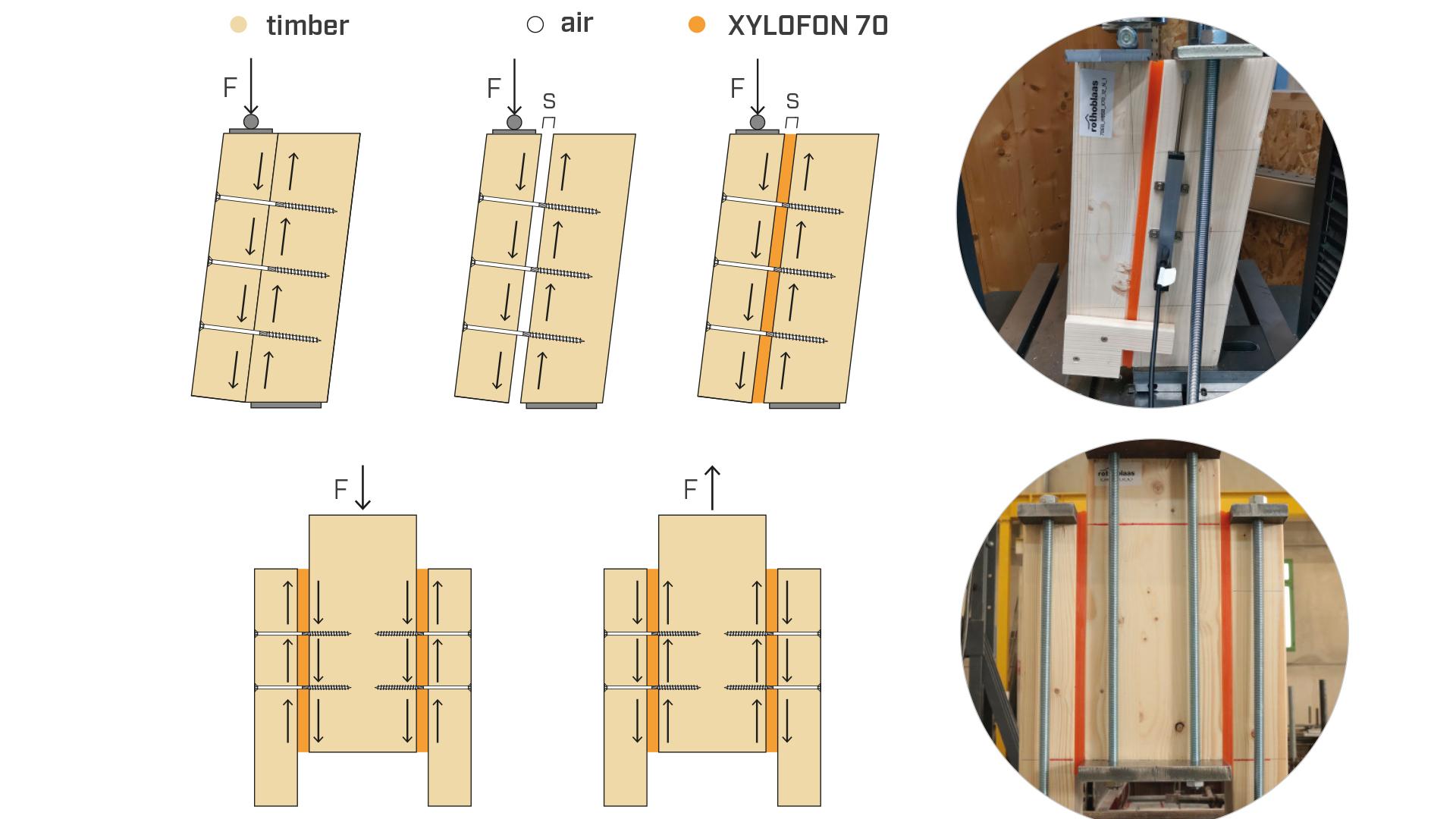
The first key finding concerns the characteristic shear strength.
For monolithic, non-compressible but deformable profiles with a thickness of ≤ 6 mm, the strength of the connection is comparable to the case without a profile in between.
As a first approximation, the values can therefore be considered equivalent to the direct timber-to-timber case, with no significant penalties at the Ultimate Limit State.
This applies both to:
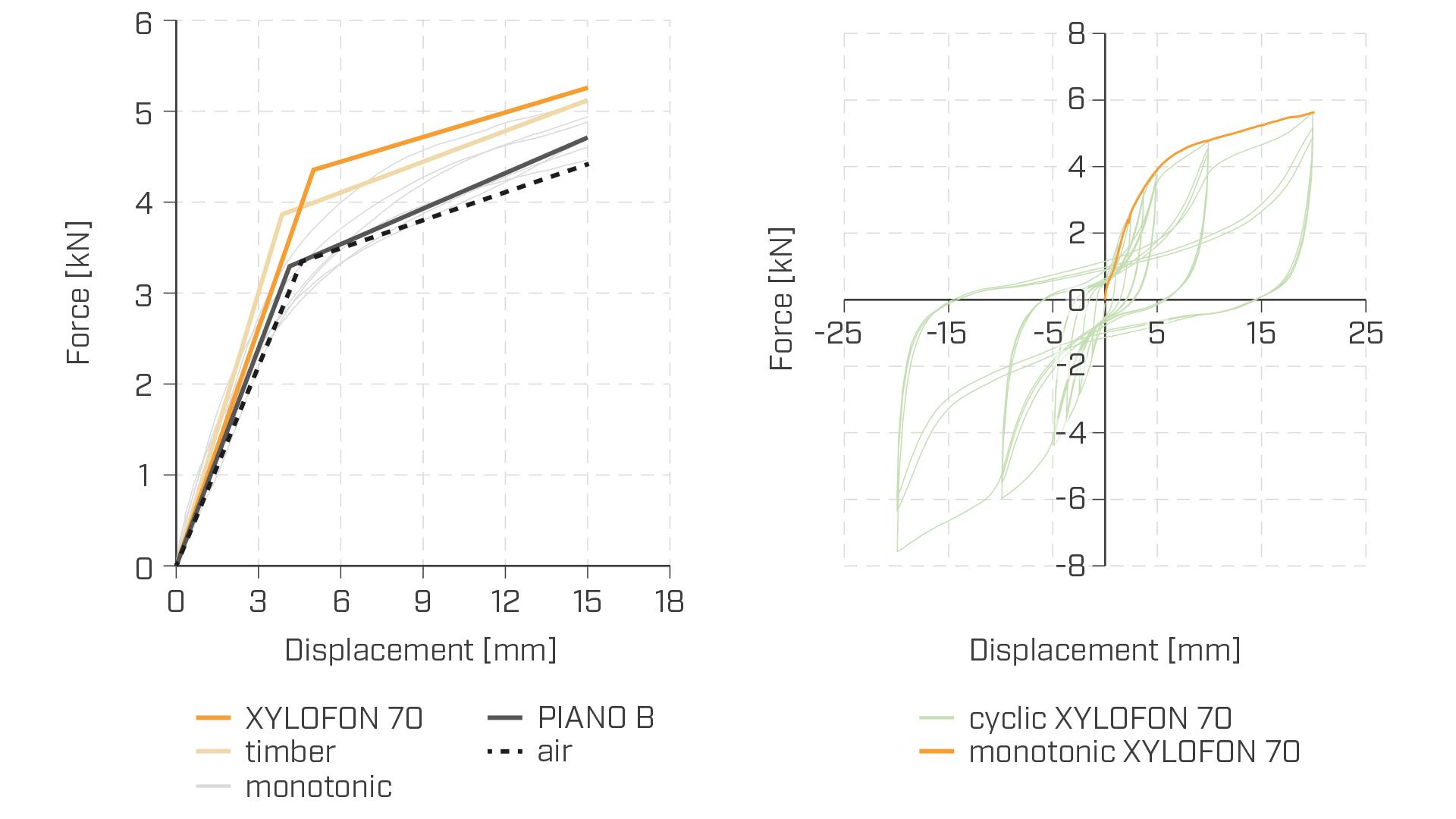
Cyclic loading behaviour is consistent with the monotonic response, indicating stable and predictable mechanical performance.
The insertion of an acoustic profile therefore does not compromise structural safety in terms of strength.
Joint stiffness: the key parameter
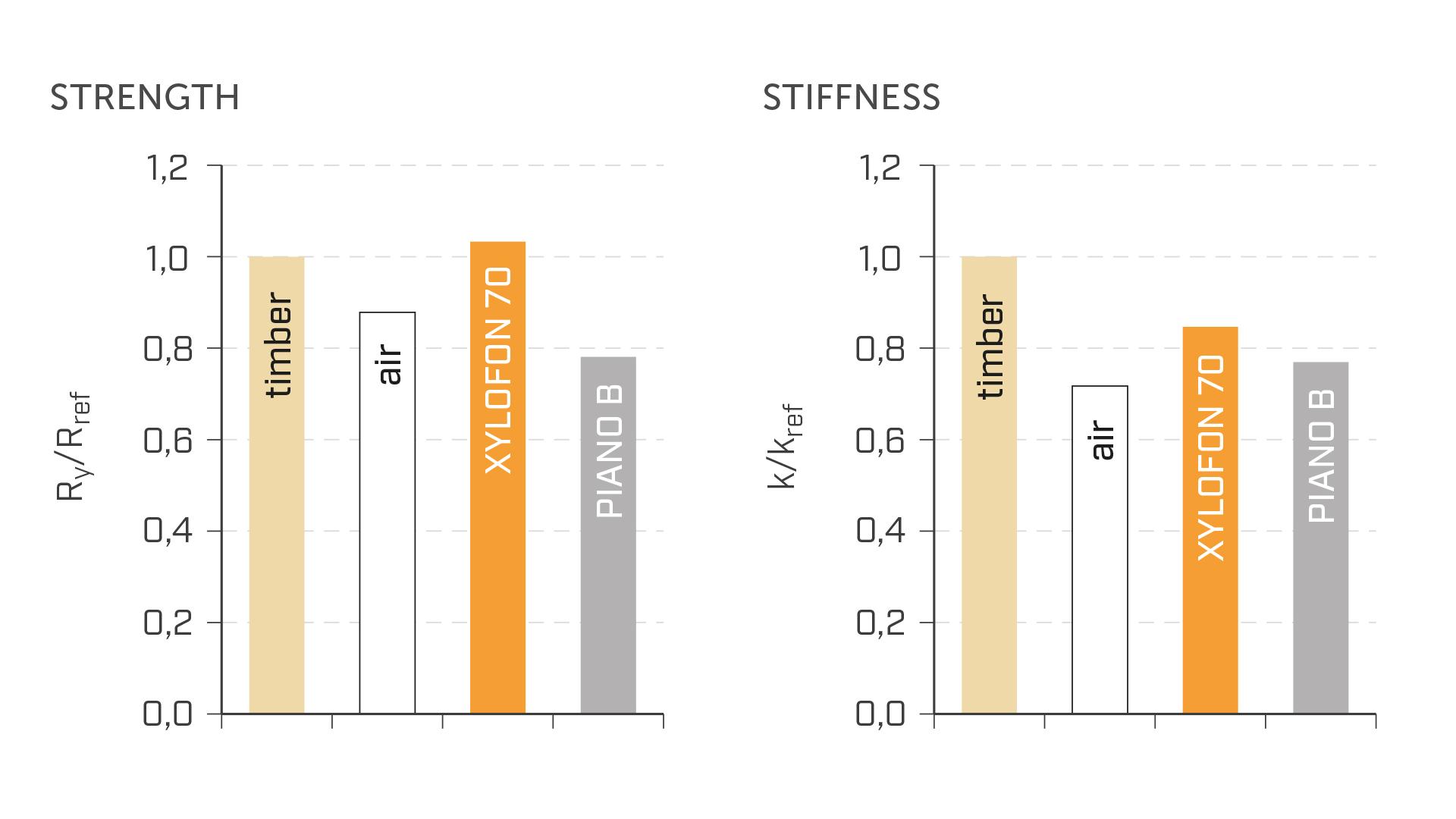
The experimental campaign revealed a different picture when it comes to stiffness.
Introducing a resilient profile leads to a significant reduction in Kser compared with the configuration without profile.
The reduction is influenced by several factors:
Material compressibility
The greater the compressibility of the profile, the greater the reduction in initial stiffness. Monolithic materials (XYLOFON) perform significantly better than expanded and compressible materials (PIANO A and PIANO B).
Profile thickness (s)
For s > 6 mm, a progressive reduction in stiffness is observed.
Connector diameter
Smaller diameters are more sensitive to the insertion of the resilient layer.
For partially threaded screws, the reduction in stiffness can be significant, even though strength remains unchanged.
For fully threaded connectors, the decline in stiffness is equally evident, relating to the unconfined portion of the thread within the gap.
From a design perspective, this means that deformation checks become the key consideration.
Structural interpretation of the phenomenon
The presence of a resilient profile modifies the force-displacement curve of the joint:
the initial phase shows greater deformability;
the ultimate capacity remains essentially unchanged;
the cyclic response does not introduce unstable behaviour.
From a global perspective, this entails:
greater local deformations;
a potential increase in relative displacements between panels;
The system therefore does not lose load-bearing capacity, but does become more deformable.
Controlled integration of acoustic and structural performance
The solution is not the elimination of the resilient profile, but rather its controlled and informed integration.
The experimental analysis shows that:
with limited thicknesses (≤ 6 mm), the strength can remain unchanged;
the reduction in stiffness is predictable and quantifiable;
the cyclic behaviour is consistent with the monotonic response;
the most sensitive parameter is the initial deformability of the joint.
This allows designers to model the connection while accounting for the actual contribution of the resilient profile, avoiding overly conservative simplifications.
When designing a CLT building with high soundproofing requirements, it is therefore necessary to: assess the effect on the system's global stiffness at the Ultimate and Damage Limit States; verify deformations and vibrations at the Serviceability Limit State; keep the profile thickness within the validated limits; and select screw diameters and lengths consistent with the new configuration.
Integrating structural and acoustic performance is technically feasible, provided the interaction between the resilient material and the connector is fully understood and properly managed.
For a complete dataset, comparative tables and the calculation principles applied to the different configurations, see the technical report “Timber joints with resilient profiles”
All rights reserved